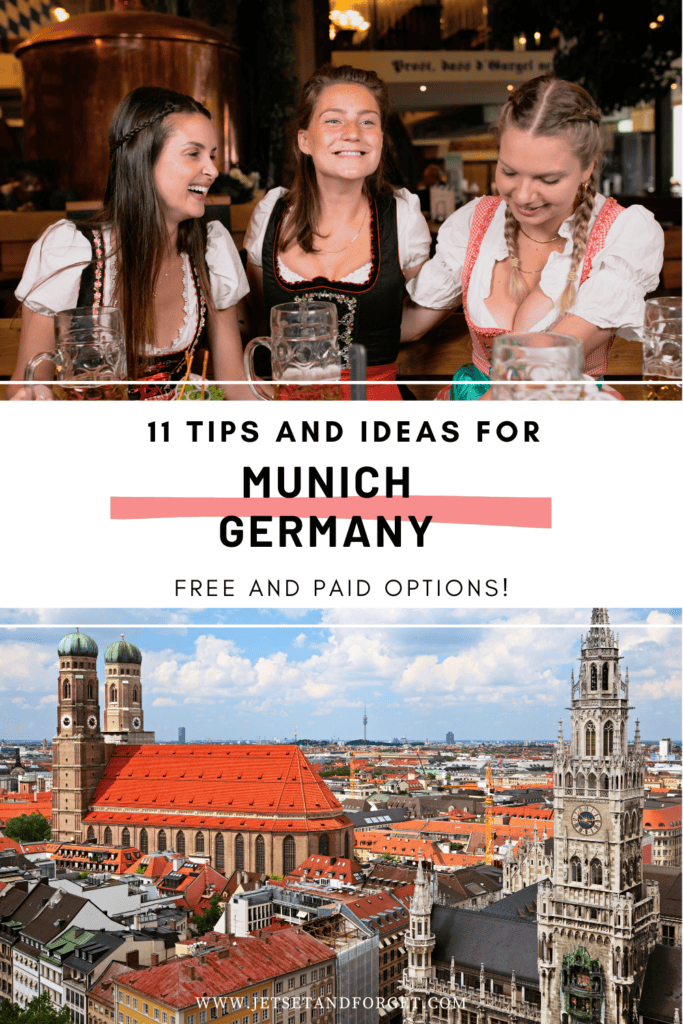
I’ve had the pleasure of visiting Munich multiple times, and each trip deepens my appreciation for this Bavarian city.
From its historic beer halls and lively festivals to the serene beauty of the English Garden, Munich offers a rich tapestry of experiences.
Its efficient public transportation system makes exploring the city’s diverse neighborhoods and attractions both easy and enjoyable.
Whether you’re a history buff, a foodie, or simply looking to soak in the local culture, Munich has something special for every traveler!

Where is Munich, and Why Should I Visit?
Munich (München) is the capital of Bavaria and sits just north of the Alps, close to the Austrian border.
Bavaria (if you are unfamiliar) is the largest state in Germany, covering much of the southeast portion of the country.
Even though it had to rebuild itself after World War II, you will still see traces of traditional customs and culture. The modern city spans 199 miles and has 1.5 million inhabitants.
It’s best known for its world-famous Oktoberfest, but there’s so much more to this city than beer and pretzels.
From grand palaces and centuries-old architecture to sprawling parks and cozy beer gardens, Munich blends old-world charm with modern energy.
It’s also a great home base for day trips, thanks to its central location and top-notch public transport.
How to Get Around Munich
If arriving by air, there is one main airport servicing the city, called Munich International Airport, or Flughafen München.
It is modern and attached to the extensive subway system, so you can easily transfer to the city center after your flight.
Even though you may not be able to pronounce the Munich train station names, there are plenty of signs to help you navigate the subway lines.
The two main lines are called the S-Bahn and the U-Bahn. The S-Bahn will take you outside of the city limits, and the U-Bahn stays underground, transporting you throughout the city center.
Pro Tip for Riding the Munich Metro:
In most European cities, you need to validate your bus and train ticket BEFORE you ride. You will find small boxes (they vary in color and size) either before you enter the train platform or inside the bus. Put the ticket inside the machine, and it will stamp it with a time.
In Munich specifically, you will see small boxes that are waist-high near the subway entrance where you can slide your ticket into the machine, and it will stamp the ticket.
Many people forget to do this, and the German police are very diligent about handing out tickets to passengers!!!!
A one-way ride is around 2.90€, and they also offer one-day and multi-day tickets, which you can buy at ticket machines at the stations.
Munich also has a bus system, but it can get confusing to maneuver, so I suggest using the metro system.
Average Prices in Munich
Hotels range anywhere from $200 a night for a budget hotel to $500 a night for a 4-star hotel, and hostels are $25- $40 a night for dorm rooms.
During Oktoberfest, prices will triple and even quadruple, so you must book at least six to nine months in advance.
When dining out, breakfast costs between $10 – $15, lunch $15 – $25, and dinner $50 – $100.
If you are staying at a hostel, I suggest making your meals in the shared kitchen area, if possible.
Book Your Train or Bus in Advance
I use Trip.com to book all of my European Trains. They are reliable and I have never had an issue trying to redeem a ticket at the terminals.
If you are visiting Munich solely for the beer, you will want to save your money for the beer gardens, where the beverages can cost anywhere from $8-$10 per drink, and the food $15-$30.
Attractions range anywhere from free to €25. Some attractions offer student discounts, which you may be able to take advantage of.
I have stayed on the outskirts of the city, as well as within walking distance of the Oktoberfest fairgrounds.
Due to the efficiency and speed of the mass transit system, it will not take you longer than 30 minutes to get from location to location.
6 Fun Things to Do Around Munich
The first thing to do is take a walking tour of Munich’s city center. This will help you get an idea of the main historical points of the city.
Most hostels offer free tours, and you can join them even if you are not staying at the hostel.
Tours are also great for Munich solo travel, as they give you a chance to meet new friends and hang out with them after the tour.
Fun Munich Tours
During my first visit to Munich, I visited the six places below, and it gave me a good idea of what the city and the surrounding area were all about.
If this is your first time, and you have at least a week, you can easily see many of the locations below during your stay.
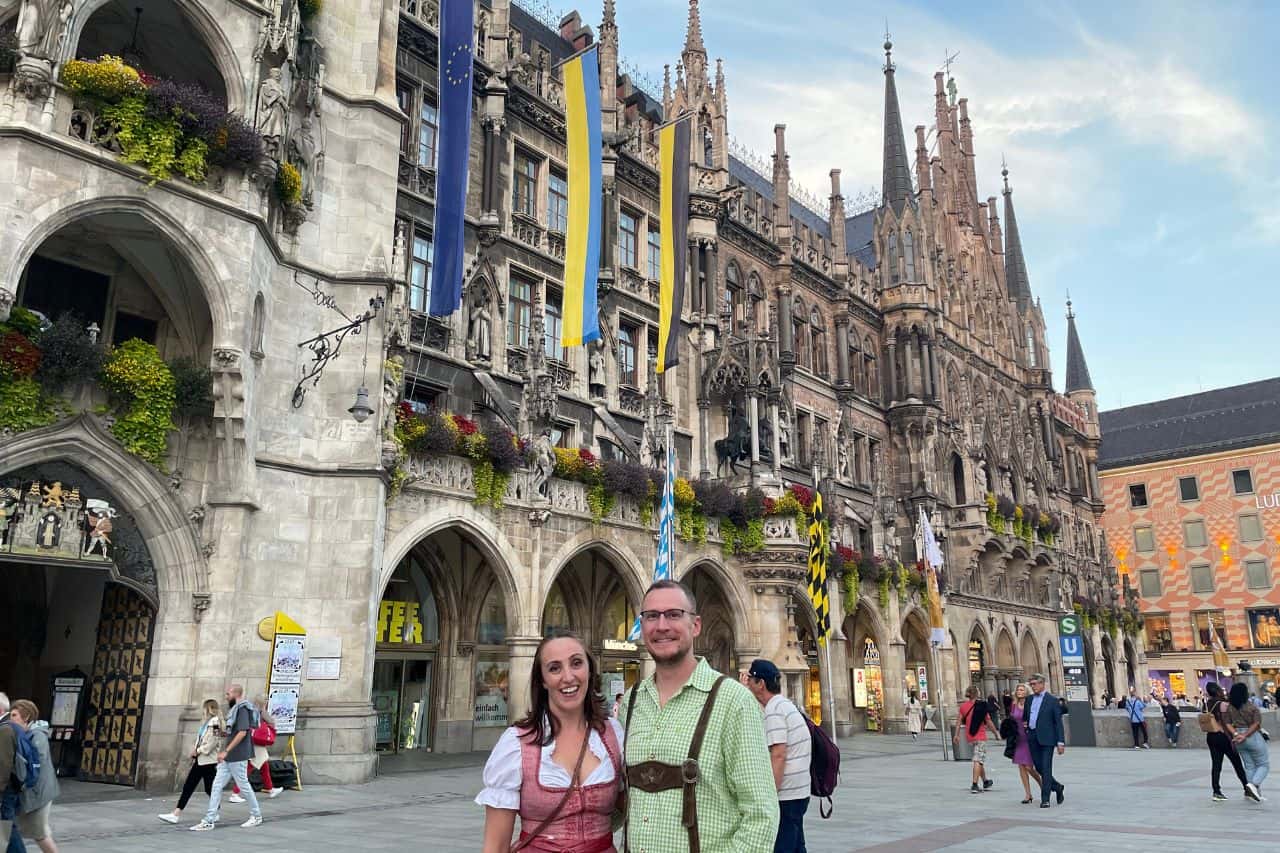
#1 Wander the Iconic Marienplatz
Marienplatz is Munich’s central square, and it can easily be reached by many of the metro lines.
A must-see is the New Town Hall (Neues Rathaus), pictured above. It is an imposing Neo-Gothic building renowned for its Glockenspiel, a mechanical clock that performs daily, re-enacting historical events with its figures.
You can also climb the New Town Hall tower for panoramic views of the city. Look for the Mariensäule (Marian Column), topped with a golden statue of the Virgin Mary, and the Old Town Hall (Altes Rathaus), which houses a charming toy museum.
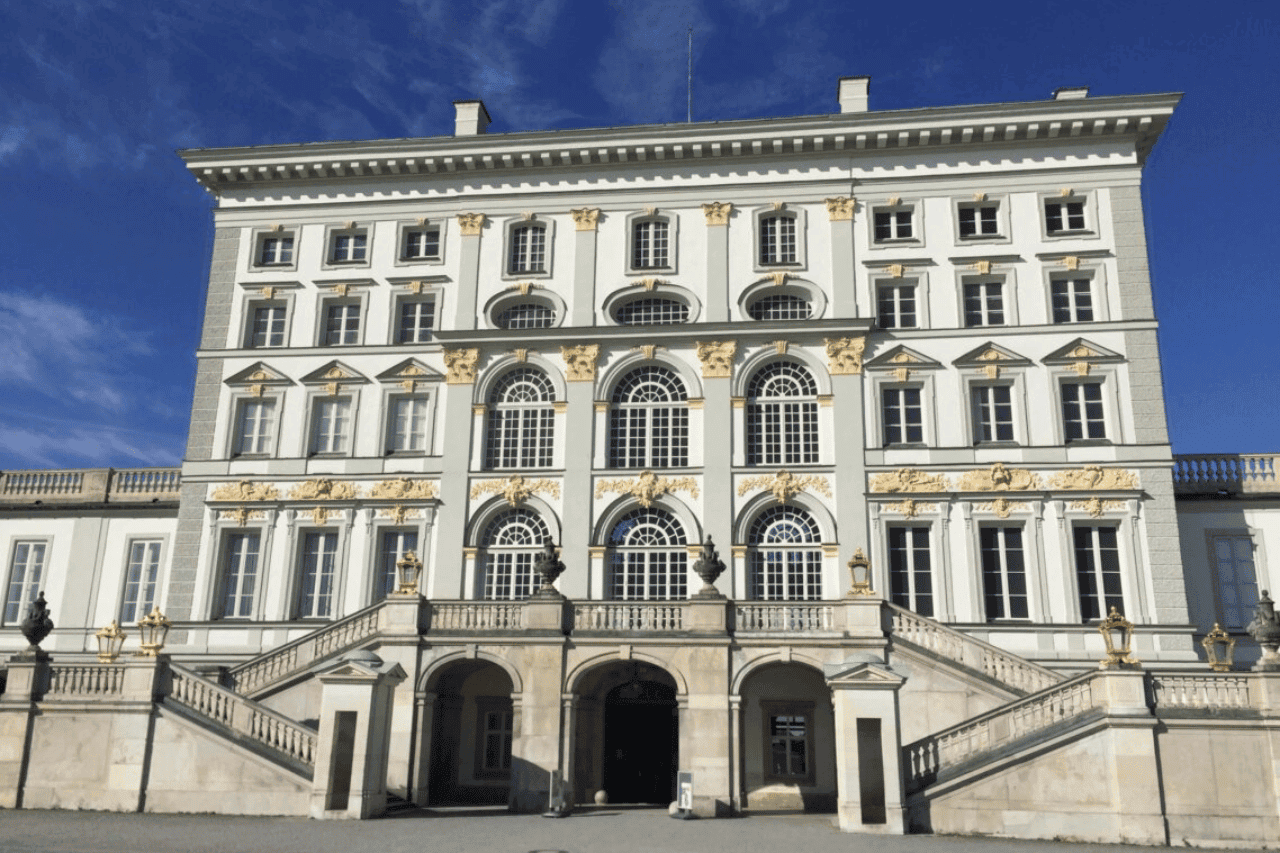
#2 Go Back in Time at Schloss Nymphenburg
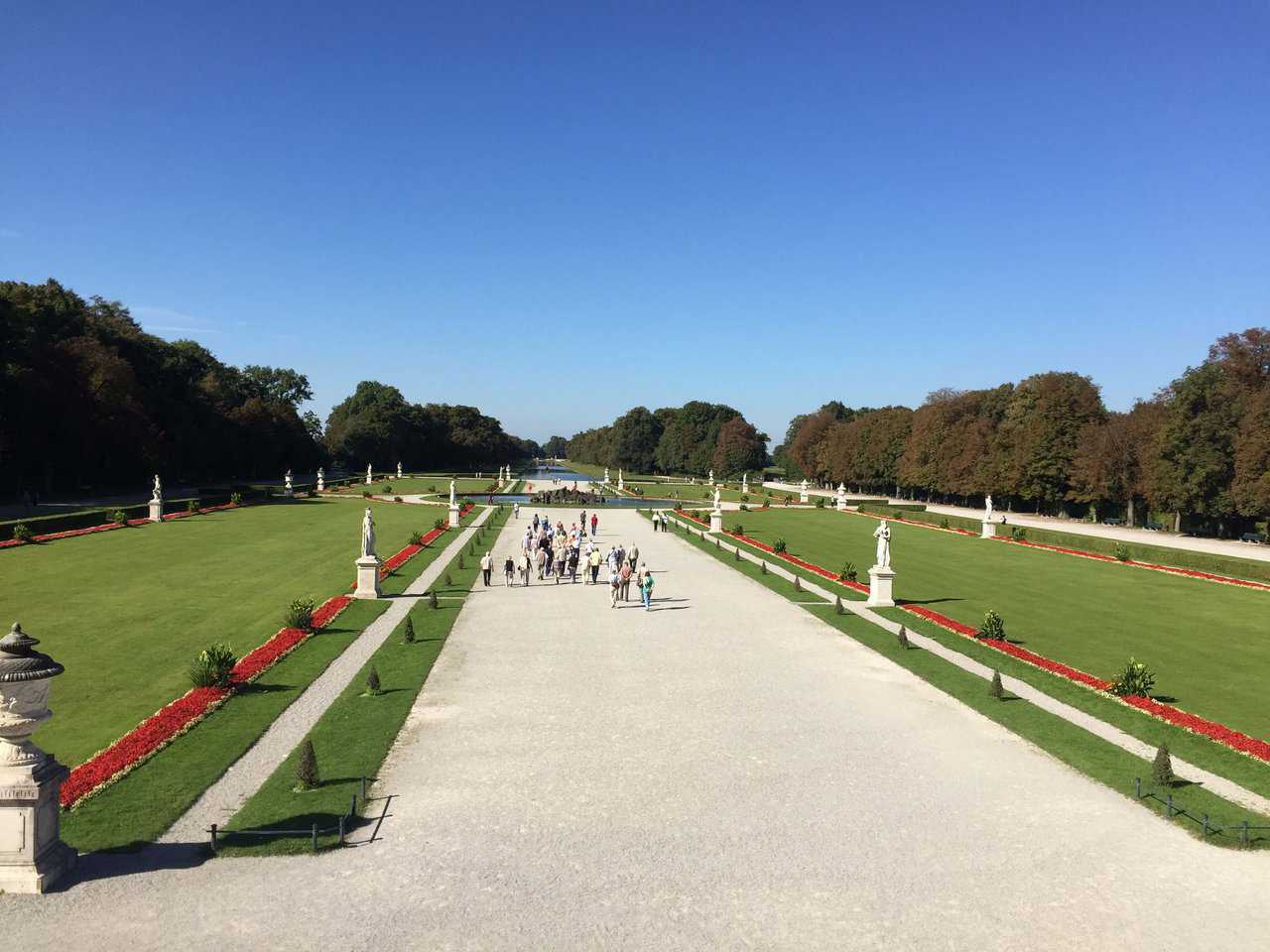
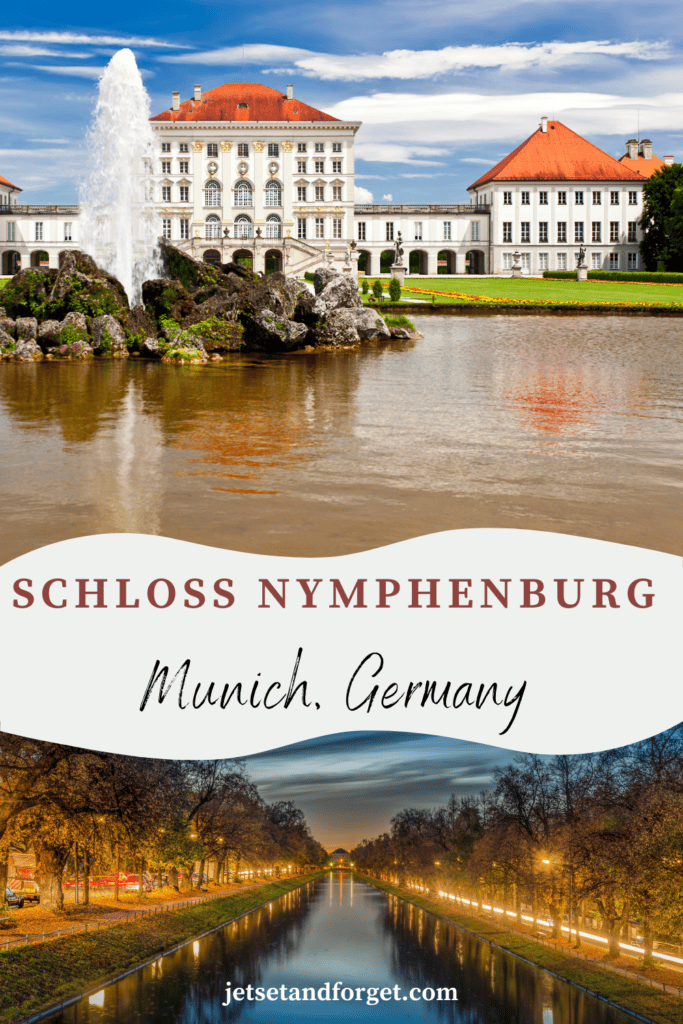
Schloss Nymphenburg, a magnificent Baroque palace, served as the summer residence for Bavarian electors and kings.
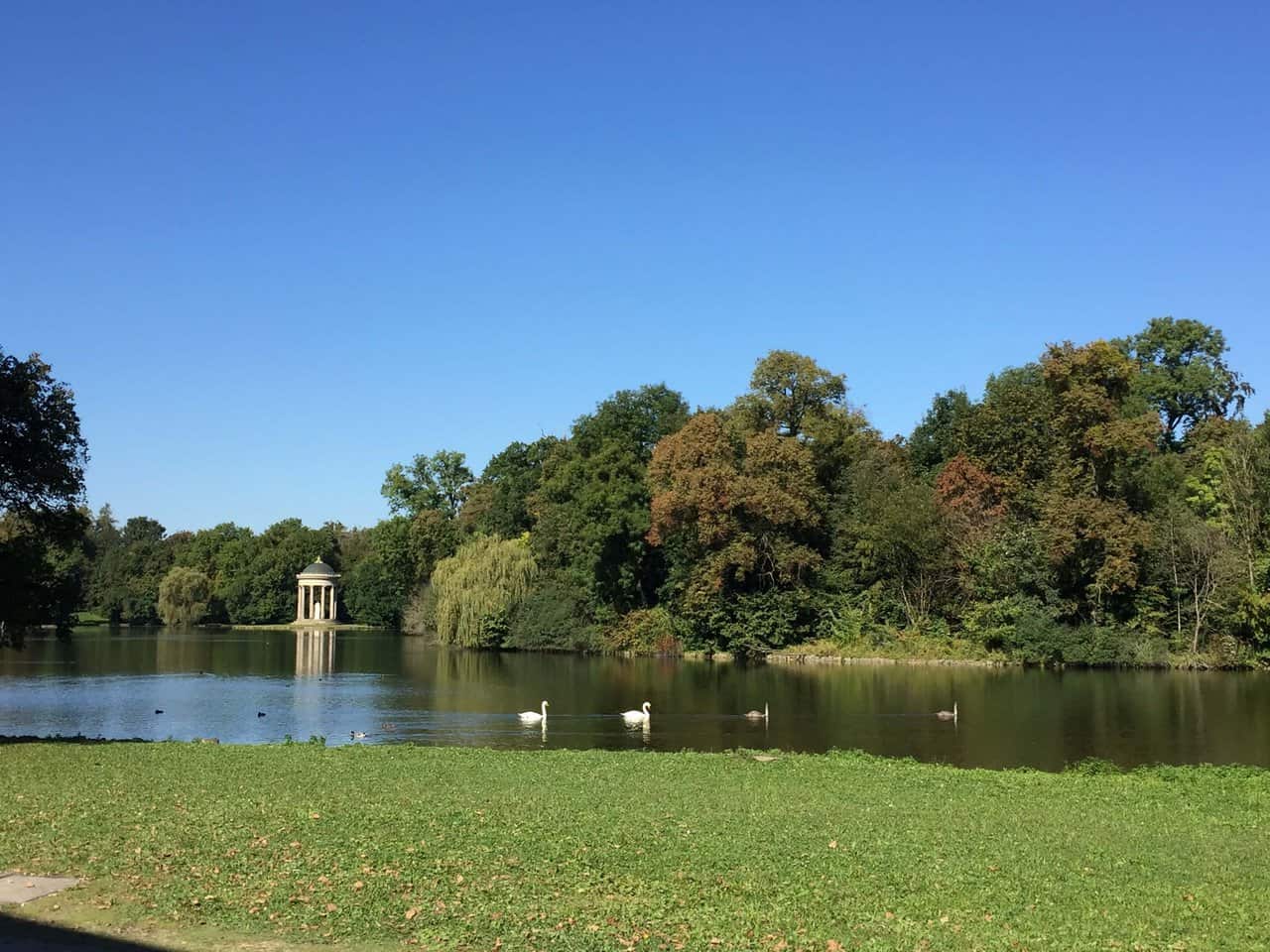
Its expansive grounds feature beautiful gardens, intricate fountains, and several smaller park pavilions like the elegant Amalienburg.
You can take the S-Bahn for six minutes to Laim and then walk an easy 20 minutes through town, or there are buses and taxis to take you straight to the palace.
Check out my post on visiting Schloss Nymphenburg for more details.
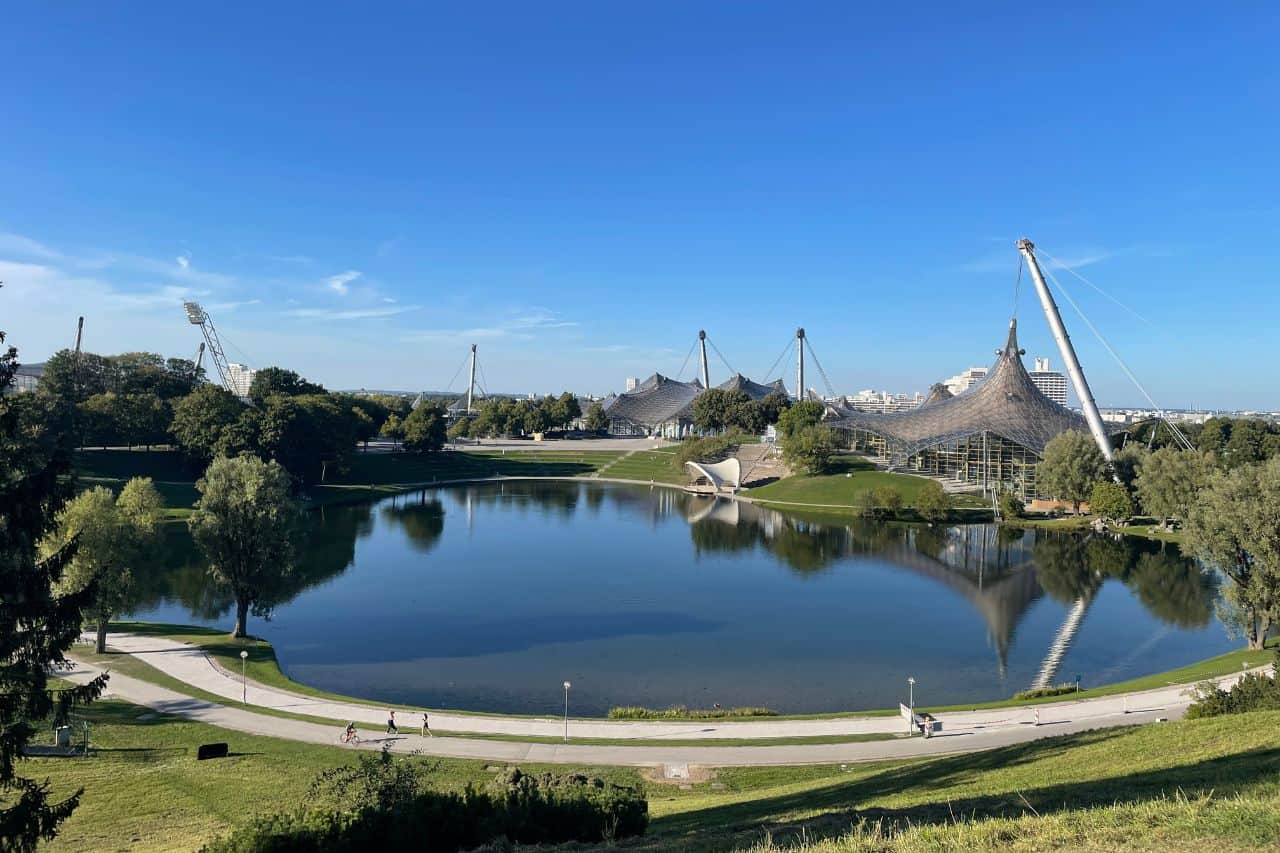
#3 Ride a Bike Around Olympiapark
The site of the 1972 Olympic Games is now open to the public for visitors, and you can see the original Olympic Tower, Olympic Hall, and Stadium.
The park offers a ride up to the top of the tower for a small fee, as well as a tour of the grounds, and hosts the BMW Welt building, which celebrates the BMW brand.
The most direct U-Bahn stop for Olympiapark is Olympiazentrum, served by the U3 line. From there, it’s just a short walk to the main attractions within the park, including the Olympic Stadium and the Olympic Tower.
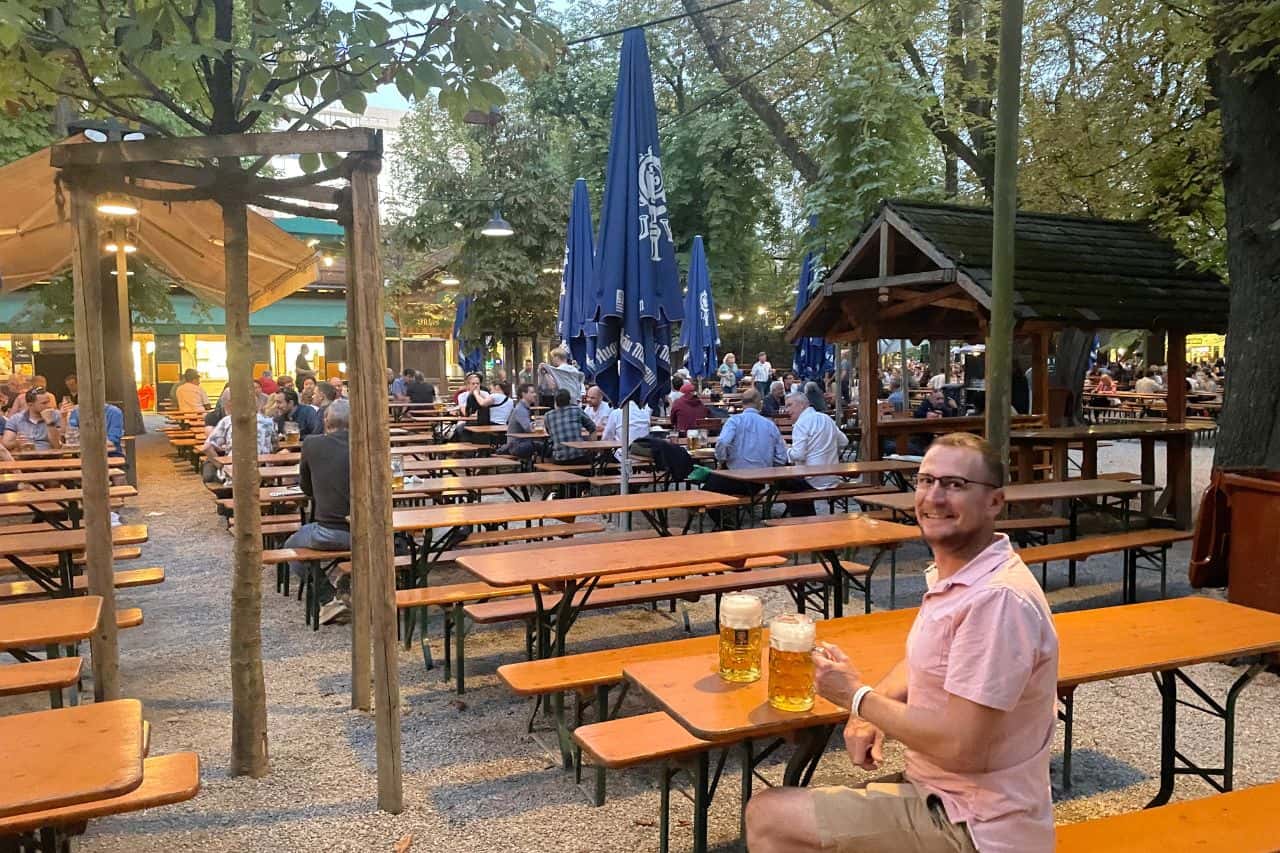
#4 Visit One of the Many Beer Gardens
A trip to Munich would not be complete without a few hours spent in a beer garden, an essential part of Bavarian culture.
Here, you’ll relax on traditional wooden benches, enjoying refreshing beers served in tall glasses, liter-sized mugs, or even the iconic Das Boot.
With numerous gardens to choose from, each typically serves beer from its own brewery, allowing you to sample a variety of Munich’s famous brews.
Here are five of my favorite beer gardens to consider visiting. Use the map above to see their locations!
- Hirschgarten: Known as the largest beer garden in Bavaria, it offers a vast space under chestnut trees, often with deer roaming in a nearby enclosure.
- Chinesischer Turm (Chinese Tower): Located in the picturesque Englischer Garten, this iconic beer garden is centered around a striking pagoda and often features live brass band music.
- Augustiner Keller: One of Munich’s oldest and most traditional beer gardens, it’s known for serving Augustiner beer directly from wooden barrels, offering a truly authentic experience.
- Viktualienmarkt Biergarten: Situated right in the heart of Munich’s popular food market, this central beer garden is unique because it rotates the beer served, featuring a different Munich brewery every six weeks.
- Hofbräukeller: While related to the famous Hofbräuhaus, this beer garden offers a more relaxed and family-friendly atmosphere under mature chestnut trees, a short distance from the city center.
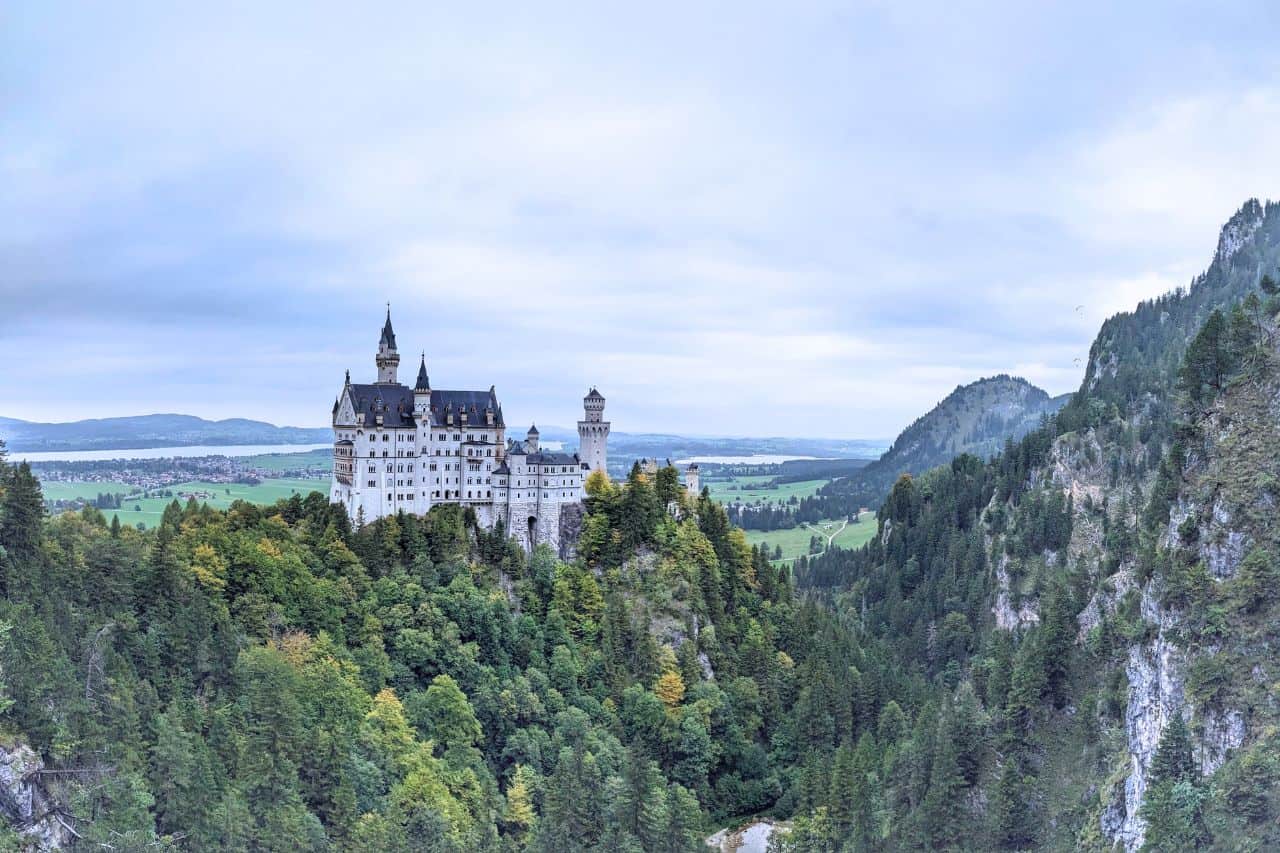
#5 Take a Day Trip to Visit a Fairytale Castle
Perched dramatically amidst the Bavarian Alps, Neuschwanstein Castle is a 19th-century Neo-Romanesque masterpiece that famously inspired Disney’s Sleeping Beauty castle.
This “fairytale castle” was envisioned by King Ludwig II as a private retreat and a homage to the operas of Richard Wagner, featuring lavish interiors and stunning mountain vistas.
By far, this is my favorite day trip from Munich. I would suggest renting a car; however, I also included the public transport directions below.
The castle is near the town of Füssen, in the very south of Bavaria, Germany.
- Price: A regular adult ticket costs €21.00
- Website for Tickets: https://www.neuschwanstein.de/englisch/tourist/index.htm
How to Get There from Munich via Public Transport:
Take a regional train from Munich Hauptbahnhof to Füssen (approx. 2 hours). From Füssen station, take bus #73 or #78 to Hohenschwangau village (approx. 10-15 minutes).
From Hohenschwangau, you can walk uphill (30-40 minutes), take a shuttle bus (seasonal, extra fee), or a horse-drawn carriage (extra fee) to the castle entrance.
The Bayern Ticket is recommended for public transport, covering regional train and bus travel for a day.
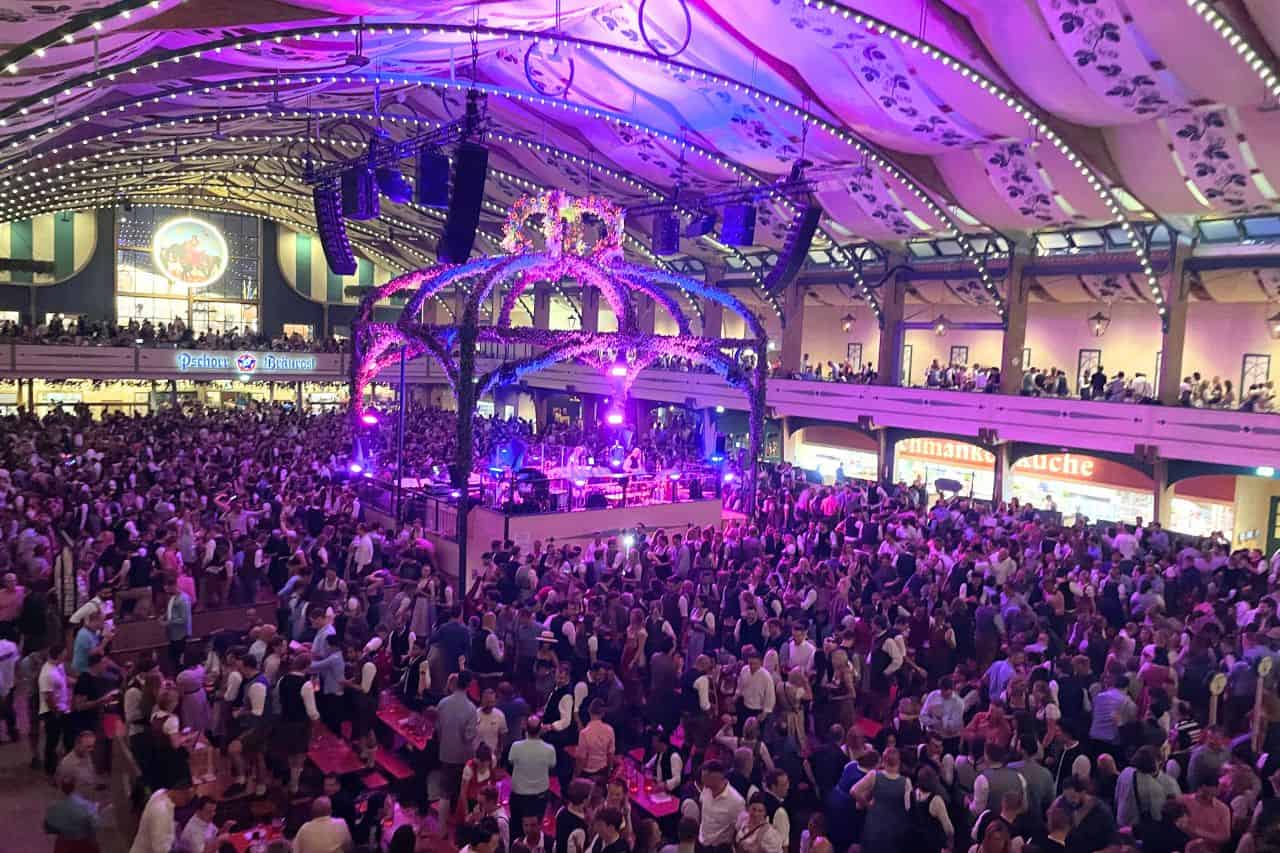
# 6 Enjoy Oktoberfest (My Favorite!)
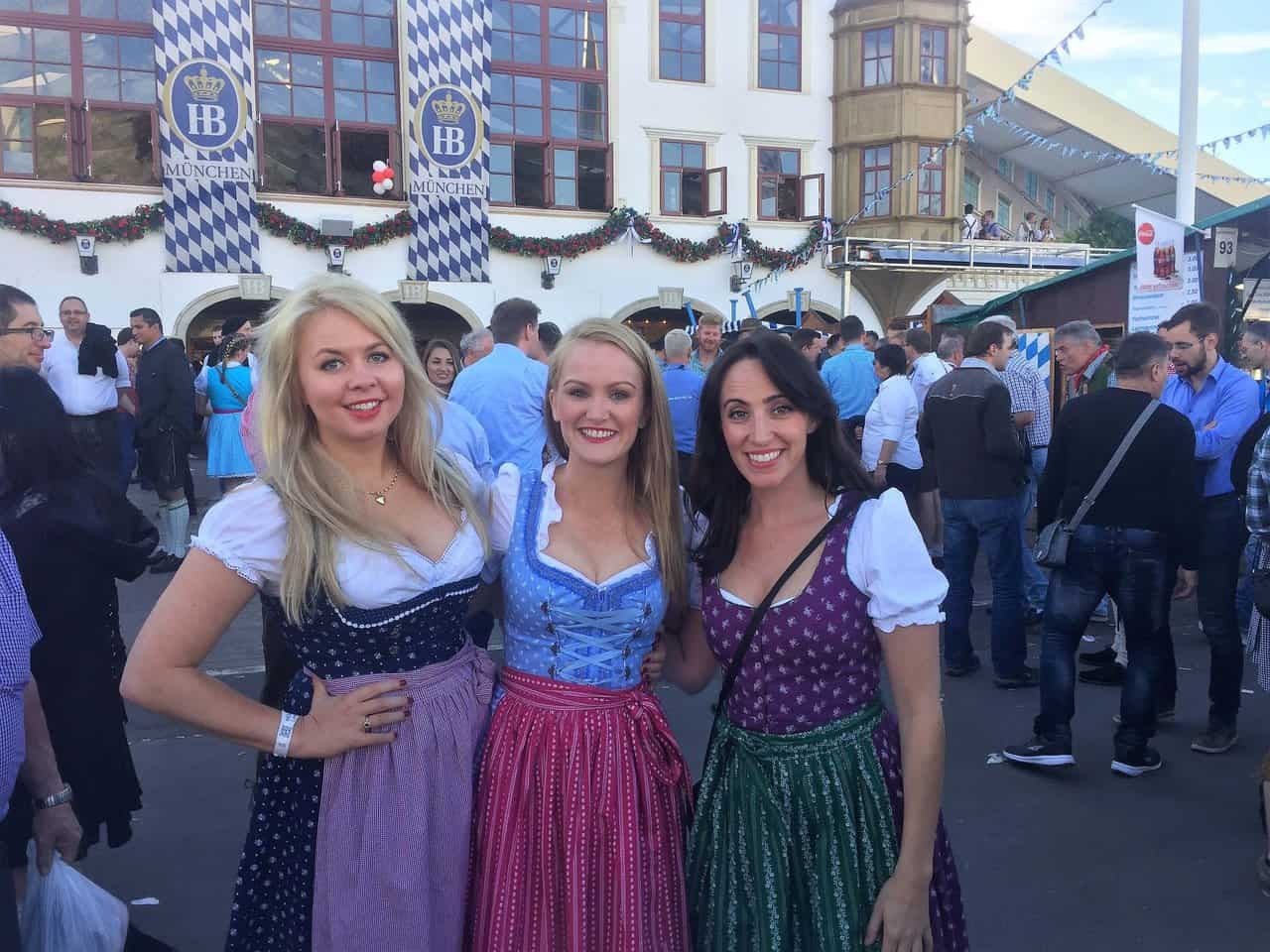
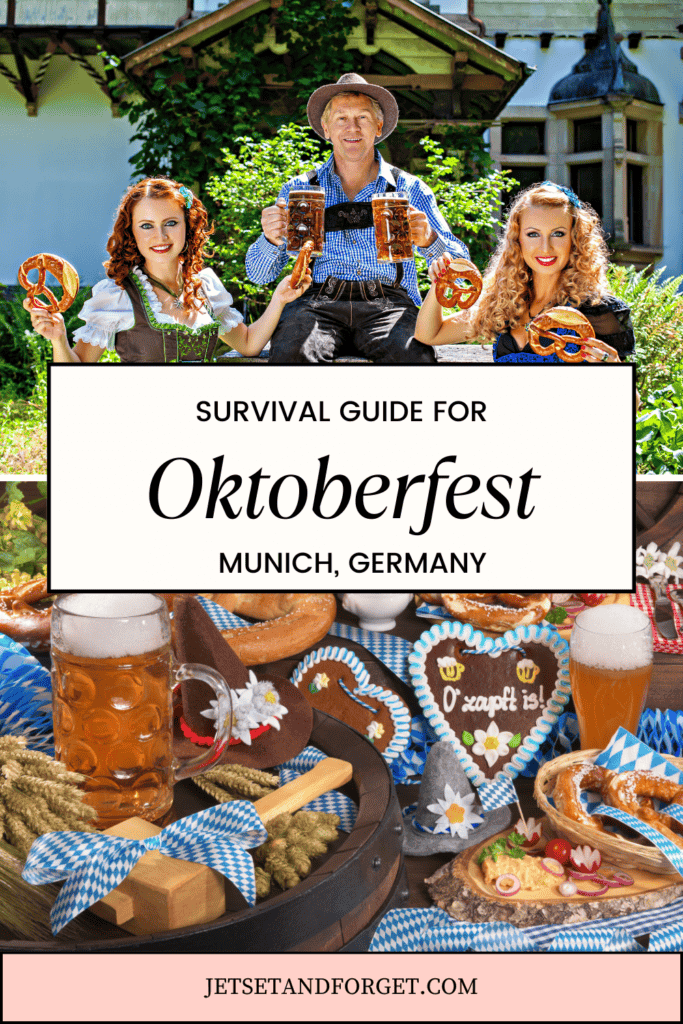
A highlight of Munich’s annual calendar is Oktoberfest, the world’s largest folk festival, typically running from late September to the first Sunday in October.
It is my favorite thing to do in Munich, as I have been several times!
While a general entrance ticket isn’t required, securing a spot in one of the famous beer tents often involves planning ahead, especially on weekends.
For an in-depth guide on making the most of this unique experience, be sure to check out my dedicated blog post on “How to Survive Oktoberfest.”
More Tips: The Food Scene
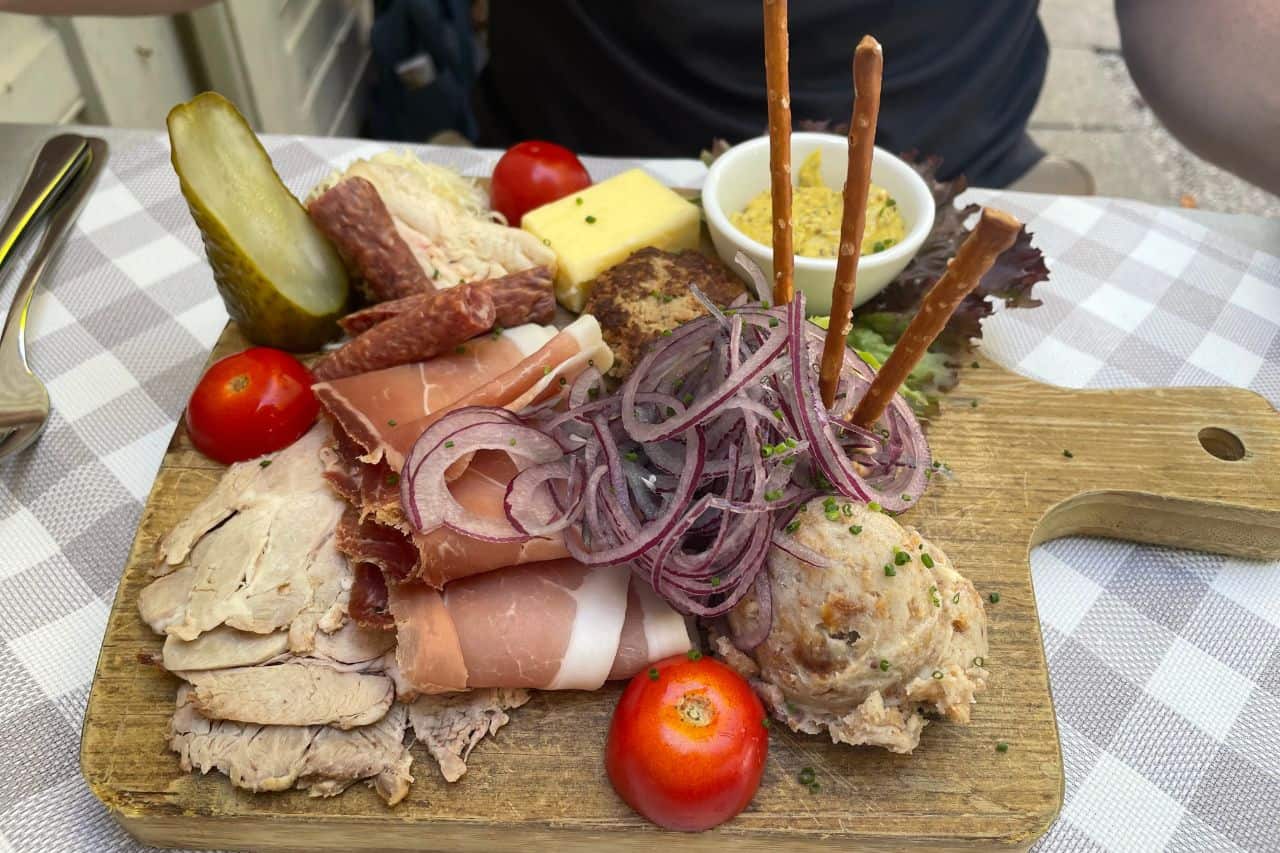
We know one thing: Germans love their bratwurst, mild cheeses, and pretzels. I found the menus to be very similar in Munich, offering the same menu at each location.
Some establishments do put a modern twist on certain items, but for the most part, you will see the same combination of food on each menu: meat, cheese, and bread.
One thing to note is that breakfast is not like the American breakfast; eggs are rarely found on a menu.
For breakfast, most hotels will offer slices of bread, cold cuts (thin slices of meat), hard and soft cheese, and, of course, Nutella, a classic European hazelnut spread.
Munich Accommodation Options:
- Hostel (Private Room Options): Meininger Zentrum
- Mid-Level Hotel: Bayer 89 Vi Vadi
- High-End Hotel: Mandarin Oriental Munich
If you have a sweet tooth, I suggest trying Schmalznudel- Cafe Frischhut. It is a delicious pastry shop, serving the city’s best schmalznudel – a fried pastry dough that is light and airy, sprinkled with sugar.
My favorite was the raspberry-flavored Berliner. The bakery is cash only so be prepared!
Final Thoughts
Munich is a city that balances rich history with modern convenience, making it an ideal destination for any traveler.
With efficient public transportation, easy day trip options, and clear guidance on costs, planning your visit becomes simple and stress-free.
Whether you’re exploring Marienplatz, enjoying a traditional meal, or wandering through the English Garden, there’s something for every interest.
I hope my guide helps you make the most of your time in Munich. You’re sure to leave with great memories—and maybe even plans to return like I have so many times!
Munich Germany Tips
Is Munich, Germany worth visiting?
Yes, Munich offers a unique mix of history, culture, green spaces, and world-famous festivals like Oktoberfest.
Is Munich friendly to tourists?
Very much so—locals are generally helpful, and many people speak English, especially in tourist areas.
What should I know before traveling to Munich?
Be aware of quiet hours, cash being preferred at some places, and that Sundays are generally for rest—many shops are closed.
Can I wear jeans in Munich?
Yes, jeans are perfectly acceptable and commonly worn by both locals and tourists.
Is Munich a walkable city?
Yes, especially in the city center—many top sights are close together and pedestrian-friendly.
Is Munich very expensive?
It can be pricier than other German cities, but budget options for food, transport, and accommodation are available.
When is the best time to visit Munich?
Spring and fall offer pleasant weather and fewer crowds, though many come for the atmosphere of Oktoberfest in late September.
How do I get around Munich?
The U-Bahn, S-Bahn, trams, and buses are reliable and easy to navigate with a day pass or travel card.
Do I need to speak German in Munich?
It’s helpful but not required—most service workers and signs in tourist areas include English.
Are there any day trips from Munich worth doing?
Yes, popular options include Neuschwanstein Castle, Dachau Memorial Site, and Salzburg in nearby Austria.
Visiting Europe? Here are my Guides: